 Uniswap
 v3 pools use WETH for ETH trades while v4 pools can use native ETH
Uniswap v3 pools use Wrapped Ether (WETH) for ETH trades, while v4 pools can use native ETH. WETH gives ETH an ERC-20 token representation. A router can handle v3 wrapping within the swap transaction. In v4, avoiding that conversion requires a native-ETH pool; pools that use WETH remain a separate option.
Updated ·
An ETH label in a wallet does not identify the currency that the pool holds. The pool definition and router instructions explain the difference, including what a liquidity position contains and which asset ultimately reaches a recipient.
ETH swaps through a v3 router
A v3 router can fund the WETH side of a swap from native ETH, so manual wrapping is not always a separate prerequisite. The v3 SwapRouter payment logic can wrap ETH that the router holds when it owes WETH and has enough native balance. It then pays the pool with WETH. The conversion occurs inside contract execution, even when the wallet describes the input as ETH.
The v3 pool itself handles ERC-20 currencies. Its token0 and token1 fields identify the assets, and a pool involving ETH uses the relevant WETH contract. On the output side, the periphery has an unwrapWETH9 function that converts router-held WETH into ETH for a specified recipient. A suitable multicall can combine the swap and unwrap operations in one transaction. Receiving native ETH therefore depends on the execution plan and recipient, rather than the pool returning ETH directly.
WETH and the native ETH balance
WETH gives ETH an ERC-20 representation, which lets a v3 pool use the same token interface for both assets in its pair. The standard wrapper accepts an ETH deposit and credits an equal quantity of WETH. Withdrawal reverses that relationship. The conversion ratio is one WETH for one ETH, before accounting separately for transaction gas. This relationship describes the wrapper contract, not the exchange rate that a liquidity pool quotes for another token.
Native ETH lives in an account's native balance, while the WETH contract records a separate token balance. Those balances serve different payment interfaces. ERC-20 methods let contracts transfer WETH and use spending allowances. Native ETH uses value transfers. A wallet may display both assets, and a router may convert between them during execution.
The wrapper preserves the ETH quantity. Pool exposure changes as swaps alter a position's asset composition, so a liquidity deposit differs from holding WETH.
Native ETH inside PoolManager
A native-ETH v4 pool uses ETH directly, with PoolManager handling its accounting alongside the other pools that share the same deployed manager. Each pool still has its own state. Sharing a contract does not merge their prices or liquidity. The pool key identifies its currencies, fee configuration, tick spacing, and hook contract. In that key, the zero currency identifier represents the chain's native asset; an ERC-20 currency uses its token contract address.
A native-ETH v4 pool can settle ETH without converting it into WETH. Settlement uses PoolManager's native payment handling. WETH remains an ERC-20 currency that v4 can support separately. Changing the ETH side from native ETH to WETH changes the pool key, so the corresponding pools have distinct identities and liquidity.
Flash accounting records net amounts owed during an unlocked PoolManager interaction. Multiple pool operations can offset those amounts before the integration resolves its outstanding obligations. This can remove intermediate token transfers within the manager. PoolManager rejects an unlock that ends with unresolved currency balances, so deferred accounting does not permit unpaid obligations to survive the interaction.
Native support concerns the pool currency. A router can still include a WETH conversion elsewhere in a route that combines different pools or protocol versions.
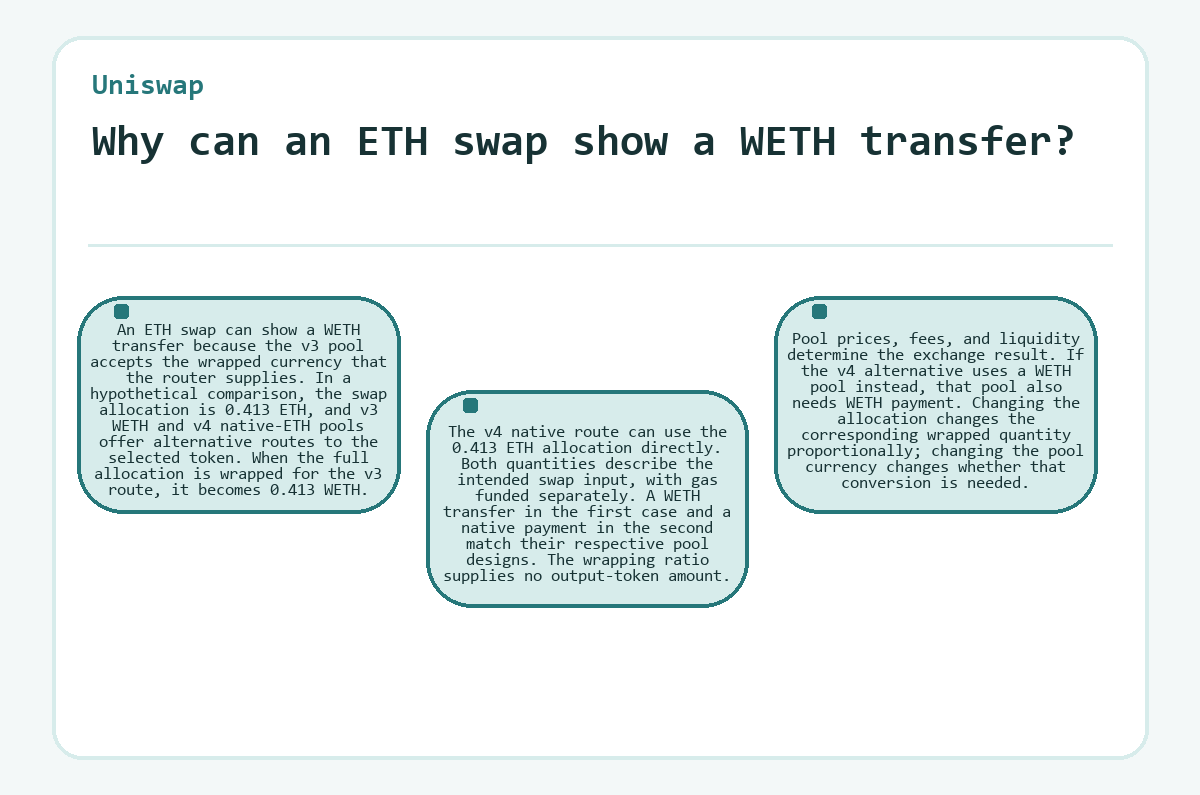
Why can an ETH swap show a WETH transfer?
An ETH swap can show a WETH transfer because the v3 pool accepts the wrapped currency that the router supplies. In a hypothetical comparison, the swap allocation is 0.413 ETH, and v3 WETH and v4 native-ETH pools offer alternative routes to the selected token.
When the full allocation is wrapped for the v3 route, it becomes 0.413 WETH. The v4 native route can use the 0.413 ETH allocation directly. Both quantities describe the intended swap input, with gas funded separately. A WETH transfer in the first case and a native payment in the second match their respective pool designs.
The wrapping ratio supplies no output-token amount. Pool prices, fees, and liquidity determine the exchange result. If the v4 alternative uses a WETH pool instead, that pool also needs WETH payment. Changing the allocation changes the corresponding wrapped quantity proportionally; changing the pool currency changes whether that conversion is needed.
Wrapping costs and the complete swap quote
Native ETH removes conversion work from a compatible v4 path, while the route, pool fees, hook execution, and network conditions determine its total cost. Avoiding wrapping saves that operation's gas work. Flash accounting can reduce additional transfer overhead when operations share PoolManager. Neither mechanism establishes a fixed saving for every swap. A route with additional work can offset those efficiencies, and the actual network fee follows the transaction that executes.
Pool fees affect the trade separately from gas. A v4 pool may have a fixed liquidity fee or a dynamic fee controlled through its configured mechanism. Optional hooks can add execution work or custom charges. Available liquidity also affects price impact, so currency handling alone cannot rank competing quotes. For an ETH swap, compare the output for the same input alongside the network cost and applicable pool behavior. A WETH route can remain useful when its liquidity supports the better overall exchange.
ETH and WETH liquidity positions
An ETH-facing v3 position supplies WETH to its pool, whereas a native-ETH v4 position accounts for ETH directly alongside its other currency. A position's pool identity determines which form it contains. An interface can handle wrapping for deposits or unwrapping for payouts, subject to its supported operations. That presentation does not change the pool's actual currencies. In v4, a WETH position and a native-ETH position remain different positions even when their other currency matches.
Concentrated liquidity determines how a standard position participates across its selected price range. Native ETH support changes currency handling; it does not remove the position's exposure to price movements or make fee income predictable. A v4 pool's optional hook can also affect swaps or liquidity changes. Hook-specific rules can add withdrawal charges or change the amounts owed. Those conditions come from the hook's behavior.
Liquidity in a v3 pool does not automatically become liquidity in a v4 pool. Likewise, a native-ETH v4 pool cannot draw on another WETH pool's assets merely because the currencies have a wrapping relationship. A swap uses only the liquidity that its route reaches.
Uniswap: questions and answers
Does WETH in a v3 swap move ETH to another blockchain?
Standard ETH wrapping into WETH on Ethereum keeps the assets on Ethereum. The wrapper holds native ETH and records the corresponding WETH token balance on the same chain. A WETH transfer inside a v3 route therefore does not establish that bridging occurred. Moving assets between networks is a separate operation with its own mechanism.
Can WETH pay the gas fee for an Ethereum pool swap?
WETH cannot directly pay Ethereum's standard transaction gas fee. Ethereum charges that fee in native ETH, even when the swap input or output is WETH. The token balance and gas balance remain separate. An account that pays its own transaction fee needs enough native ETH for gas in addition to any ETH that the swap spends.
Are ERC-20 approvals required for native ETH entering a v4 pool?
Native ETH does not use ERC-20 spending allowances. Payment passes native value through the selected integration's settlement handling. A WETH input is an ERC-20 input and can require token permissions, depending on the payment method. Providing liquidity with native ETH and an ERC-20 token can still require authorization for the token side.
Does Currency.wrap convert ETH into WETH?
Currency.wrap creates a typed currency identifier in v4 code; it does not deposit ETH into a wrapper contract. Applying it to the zero address identifies the native currency. Actual ETH-to-WETH conversion requires a call to the WETH contract. The similar wording refers to different operations, and the type conversion alone moves no assets.
How can a contract receive ETH from an unwrap or native v4 payout?
A contract recipient must accept native ETH for the payout to succeed. A suitable payable receive function or fallback can provide that capability. A recipient that rejects the payment can make the native transfer fail. Receiving an ERC-20 token follows a different interface, so accepting WETH does not establish that the contract can accept ETH.
Why can an exact-output v3 swap leave unused ETH in the router?
An exact-output swap can use less input than the maximum supplied to the router. The v3 periphery includes refundETH, which returns the contract's remaining native ETH balance to the caller when that function runs. A refund therefore depends on the execution plan. Sending a maximum input does not establish that the swap consumed the entire amount.
Is the zero currency identifier a destination for sending ETH?
The zero currency identifier describes the native asset in a v4 pool key. Actual payment uses the integration's router and PoolManager settlement handling. The identifier is not a deposit address. Sending ETH to the zero address does not pay a pool obligation or create a liquidity position.
What makes a WETH token incompatible with the router's wrapper?
The router's configured WETH9 contract determines which token its native wrapping and unwrapping functions use. Another contract can share the WETH name or ticker without being that wrapper. Its token balance will not substitute for the configured contract's balance during unwrapping. Compatibility follows the token contract, network, and router configuration.